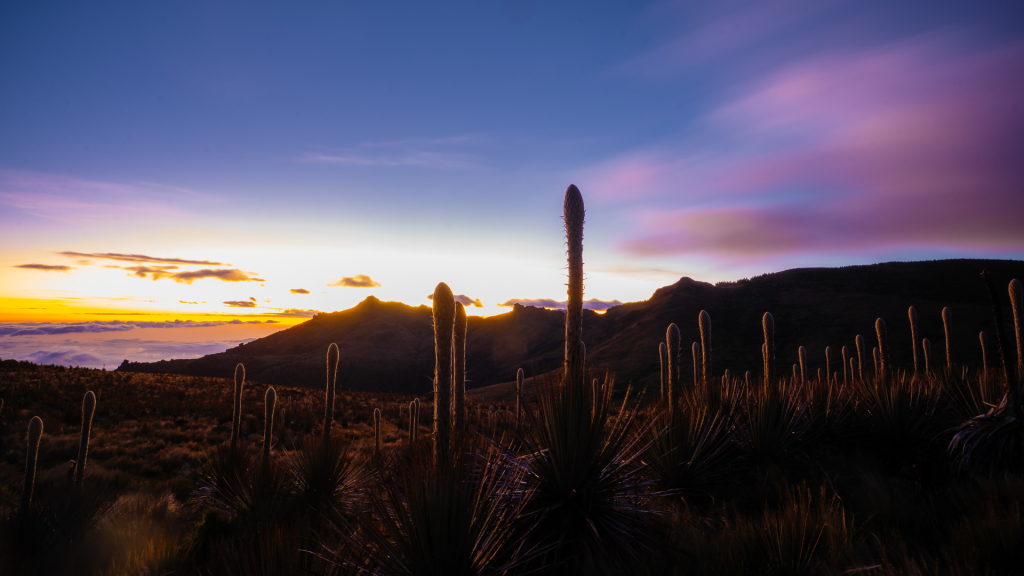


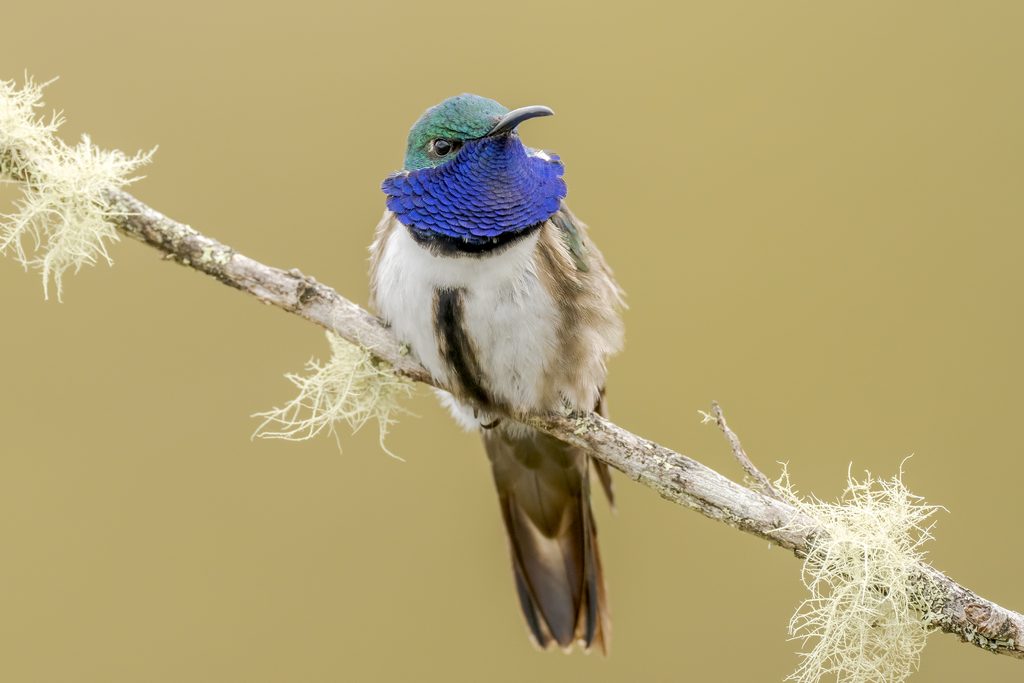
Their mission: keep the fire away from the habitat of the Critically Endangered Blue-throated Hillstar (Oreotrochilus cyanolaemus), a hummingbird restricted to 63 km² (24 square miles).
The Cerro de Arcos Reserve is the only refuge for the Blue-throated Hillstar. Thanks to Jocotoco’s habitat protection and restoration, its population has risen from 80–110 birds in 2023 to at least 124 today. But this hard-won progress remains vulnerable: a fire broke out near the reserve, burning páramo and native forest and threatening critical habitat for the species.
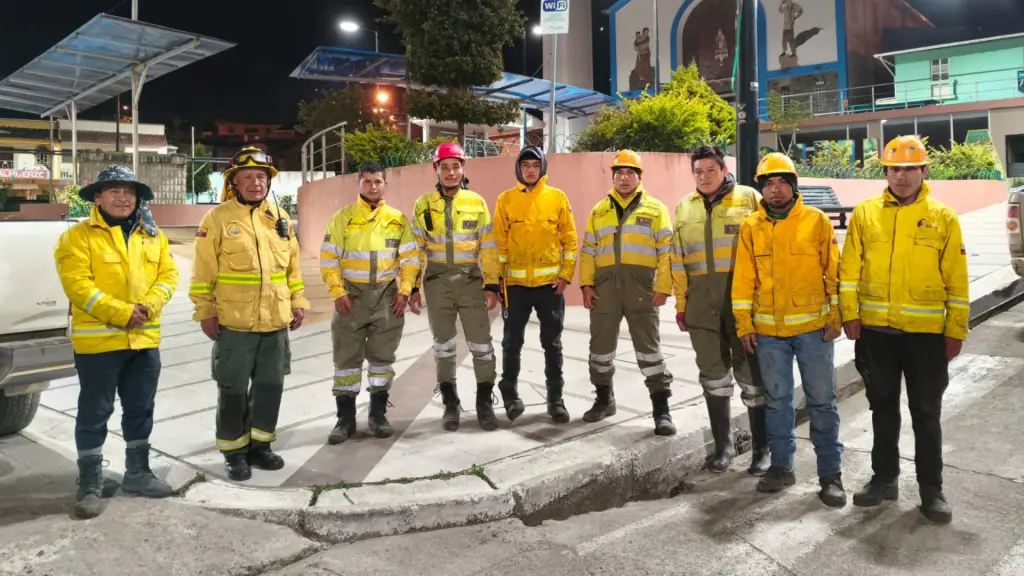
The response to the fire brought together 31 firefighters, 25 people from neighboring communities and 9 Jocotoco park rangers, some traveling from other reserves. As the flames spread across the slopes, the rangers’ worked to contain the fire and prevent it crossing the ridge into our reserve.
Technology helped the team act preemptively. While public satellites detected the fire, Satellites on Fire simulated its potential spread, helping Jocotoco’s field staff anticipate its movements and position themselves where intervention was most needed.
In the end, an estimated 600 hectares (1,480 acres) of páramo and native forest burned. But the fire never crossed the ridge into our reserve, protecting critical habitat for the recovering Blue-throated Hillstar population.

“Technology helped us understand how fire was evolving, identify the areas of greatest fire activity and guide efforts on the ground,” explains Luis Medina, coordinator of Jocotoco’s Chilla–Fierro Urco program. Satellite intelligence and the dedication of people on the ground worked hand in hand to protect this irreplaceable refuge.
Fires here are a recurring threat. Of the 51 fires recorded around our reserves since February 2024, 33 started in the dry season, between September and December. That is why our rangers train every year to prevent and fight fires and help neighboring communities strengthen fire prevention. These efforts strengthen resilience in the face of future challenges.
For a species with a range as small as the Blue-throated Hillstar’s, a single fire can destroy a significant share of its remaining habitat. Larger connected protected areas reduce the risk: they can burn too, but they can absorb the damage and recover afterwards.
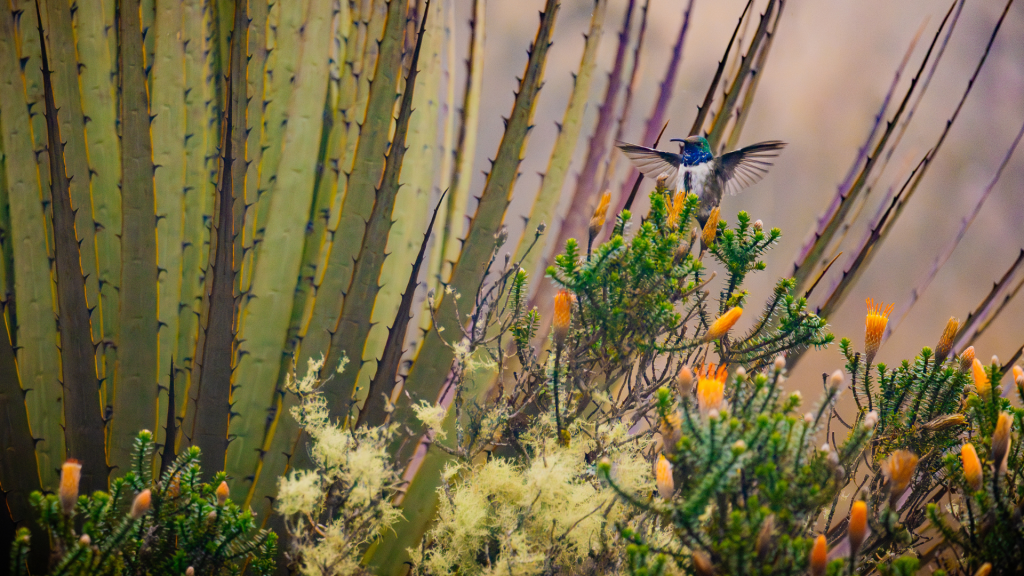
The coming months make protecting these areas more urgent: The world is preparing for one of the strongest El Niño events in recent years. Healthy páramos and forests work like sponges, absorbing and regulating water through both droughts and heavy rains, and could thereby mitigate the strong expected effects of El Niño.
Fire season is not over. Our team will keep defending critical habitat for species and people alike: training rangers and neighboring communities to prevent and fight fires. And we will help burned areas to recover. These mountains are part of a natural heritage our children deserve to inherit. We want the Blue-throated Hillstar to still be here when they come looking for it.
Support our park rangers. Donate now.